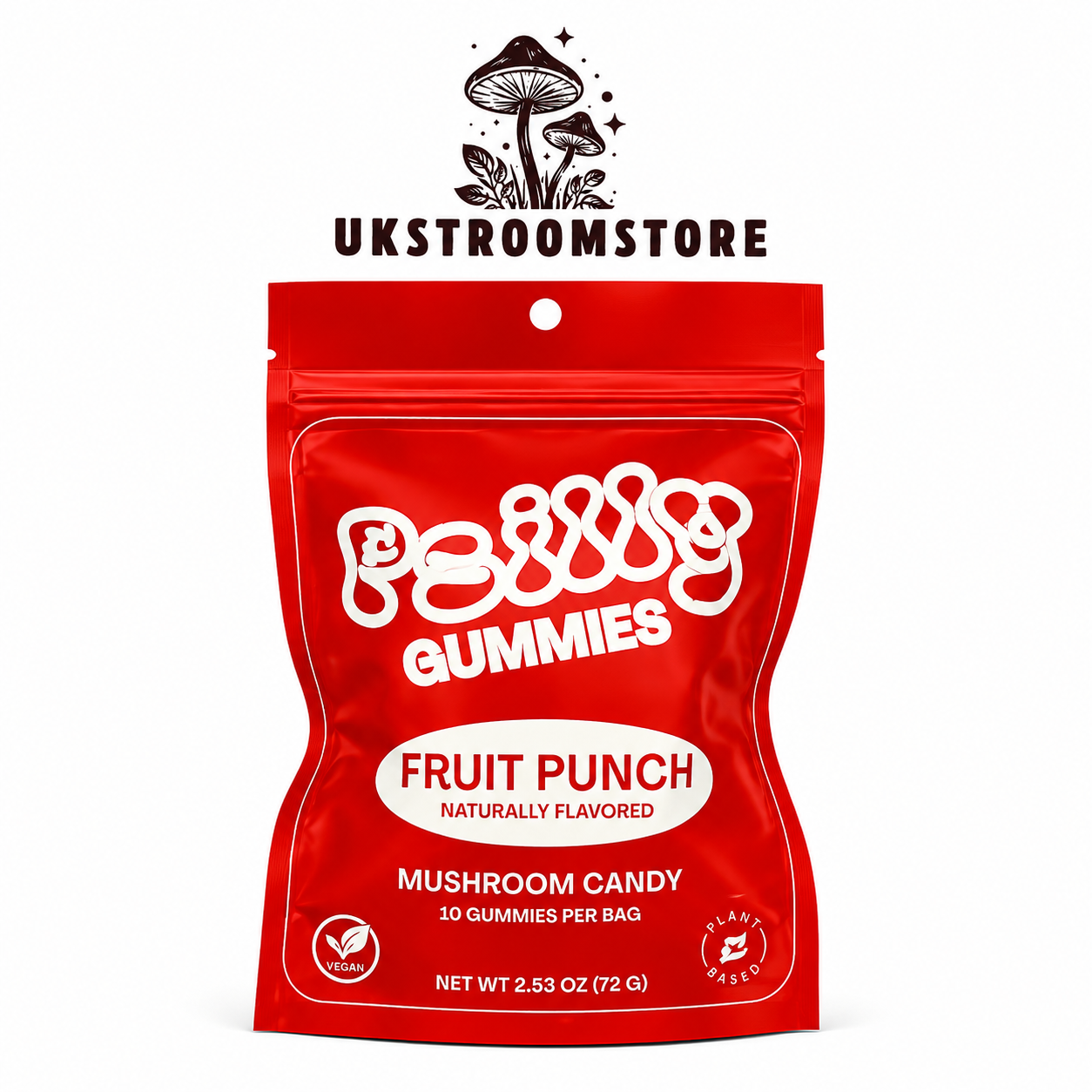
Buy Psilly Gummies – Fruit Punch Online
Buy Psilly Gummies – Fruit Punch Online belong to a growing category of speciality edible products that combine a fruit-flavoured gummy format with mushroom-themed branding. Their sweet, convenient format can attract attention, but consumers should understand the ingredients and potential risks before considering any product in this category.
The name alone cannot confirm whether a product contains psilocybin, Amanita-derived compounds, functional mushrooms, cannabinoids, or another active substance. Different manufacturers can use similar terminology for products with very different formulations.
This guide provides educational information about mushroom gummies, fruit-punch flavouring, product testing, safety, scientific research, and legal considerations.
What Are Psilly Gummies?
Psilly Gummies refer to a speciality gummy product marketed with mushroom-related branding. Gummies commonly contain gelatin or pectin, sweeteners, flavouring agents, and food colours.
A typical fruit gummy may contain:
- Sugar or other sweeteners
- Glucose or corn syrup
- Pectin or gelatin
- Citric acid
- Natural or artificial flavors
- Food coloring
Speciality mushroom gummies may include additional mushroom-derived or psychoactive ingredients. Consumers should check the current product label to determine the exact formulation.
Understanding the Fruit Punch Flavour
Fruit punch generally combines several sweet and tangy fruit flavours. Manufacturers may use combinations of berry, citrus, tropical, and other fruit notes.
The flavour profile describes taste rather than the identity of an active compound. A fruit-punch gummy can contain ordinary food ingredients or additional active substances depending on the formulation.
Consumers with allergies or dietary restrictions should check the complete ingredient and allergen information.
What Does “Psilly” Mean?
“Psilly” forms part of the product branding. Consumers should not treat that term as definitive evidence of a particular mushroom species or chemical compound.
Words such as “magic,” “shroom,” “psychedelic,” and “psilly” can appear in product marketing without establishing the exact contents.
Consumers should instead look for a complete ingredient list and reliable laboratory documentation.
Functional Mushrooms vs. Psychoactive Mushrooms
Mushroom products can contain several different categories of ingredients.
Functional mushroom products may contain:
- Lion’s Mane
- Reishi
- Cordyceps
- Chaga
- Turkey Tail
These mushrooms do not automatically contain psilocybin.
Other products may contain Amanita muscaria or its constituents. Products marketed as psychedelic mushroom edibles may contain psilocybin or related compounds.
These substances have different effects, safety considerations, and legal classifications.
Why Laboratory Testing Matters
Laboratory testing can help consumers understand the actual composition of a speciality edible. Credible testing should identify the tested product or batch and provide information about detected compounds.
Useful documentation can include:
- Complete ingredient information
- Active-compound analysis
- Batch number
- Laboratory name
- Testing date
- Allergen information
- Storage instructions
- Expiration information
The FDA’s investigation into certain mushroom chocolate products illustrates the importance of testing. Laboratory analysis identified several compounds in tested products, including psilocin, acetylpsilocin, pregabalin, kavalactones, and muscimol.
Consumers should therefore avoid assuming that packaging alone provides a complete picture of product contents.
Scientific Research
Scientists continue to study mushroom-derived compounds and psychedelic substances. Research explores areas such as perception, cognition, mood, neurological activity, and possible therapeutic applications.
Clinical research uses controlled conditions and often involves standardised substances, participant screening, professional supervision, and monitoring.
Consumers should distinguish research findings from commercial claims. Results from a clinical study involving a particular standardised compound do not automatically establish the safety or effectiveness of a commercial gummy.
Safety Considerations
Psychoactive mushroom products can produce unpredictable effects, particularly when consumers cannot verify the exact ingredients or concentration.
Potential concerns may include:
- Anxiety
- Confusion
- Panic
- Changes in perception
- Impaired judgment
- Nausea
- Changes in heart rate
- Medication interactions
People who take prescription medication or have existing health conditions should consult a qualified healthcare professional before considering products containing psychoactive compounds.
Consumers should also store unfamiliar or psychoactive gummies securely and away from children and pets. Candy-like products can increase the risk of accidental ingestion.
Amanita Muscaria Considerations
Some mushroom gummies contain Amanita muscaria or compounds derived from this mushroom. Amanita muscaria differs from psilocybin-containing mushrooms.
The FDA has stated that Amanita muscaria, its extracts, and certain constituents such as muscimol and ibotenic acid do not qualify for use as ingredients in conventional food under U.S. federal food regulations. The agency has advised consumers to avoid foods containing these ingredients.
Consumers should therefore examine ingredient labels carefully and check current regulatory information.
Legal Considerations
Laws concerning psilocybin, Amanita-derived compounds, cannabinoids, and other psychoactive substances vary between jurisdictions.
Some areas prohibit certain compounds, while others allow limited research or specific therapeutic programs. Regulations can change over time.
Online availability does not establish legality. Consumers should consult current official government guidance for the jurisdiction involved.
How to Research Mushroom Gummies
Consumers can evaluate speciality gummies more carefully by checking:
- The complete ingredient label.
- Active ingredients and concentrations.
- Batch-specific laboratory reports.
- Manufacturer information.
- Allergen statements.
- Storage instructions.
- Current local regulations.
- Advice from qualified healthcare professionals.
Consumers should approach unsupported claims from social media, anonymous reviews, and promotional websites with caution.
Frequently Asked Questions
What are Psilly Gummies – Fruit Punch?
They refer to a speciality gummy product marketed with mushroom-related branding and a fruit-punch flavour profile. The exact ingredients depend on the specific formulation.
Does “Psilly” prove that the gummies contain psilocybin?
No. Product branding cannot establish the identity or concentration of an active compound.
Does every mushroom gummy contain psychoactive ingredients?
No. Some products contain functional mushrooms without psychedelic compounds.
Why should consumers check laboratory testing?
Laboratory analysis can provide information about product composition and help identify unexpected substances or contaminants.
Are mushroom gummies legal everywhere?
No. Legal requirements vary according to the active ingredients and jurisdiction.
Conclusion
Psilly Gummies – Fruit Punch represent a speciality gummy category that combines a familiar fruit flavour with mushroom-related branding. Consumers should evaluate these products through verified ingredient information, credible laboratory testing, scientific evidence, safety considerations, and current legal guidance.
The product name and fruit-punch flavour cannot establish the presence or concentration of psilocybin or another psychoactive substance. Functional mushrooms, Amanita-derived compounds, and psychedelic compounds have different properties and regulatory requirements.
Anyone researching mushroom gummies should consult reputable scientific and government sources, review product labelling carefully, understand applicable laws, and seek guidance from a qualified healthcare professional when appropriate.


Reviews
There are no reviews yet.