Buy African Transkei Mushrooms Online
Buy African Transkei Mushrooms Online commonly refer to a cultivated variety associated with Psilocybe cubensis, a species known for producing psilocybin. The name connects this variety with the Transkei region of South Africa and frequently appears in mushroom cultivation communities and discussions about psychedelic mushrooms.
The variety name alone cannot establish the exact species, potency, chemical composition, or safety profile of a particular sample. Genetics, growing conditions, maturity, processing, and storage can all influence the characteristics of individual mushrooms.
Anyone researching African Transkei mushrooms should consider reliable information about their identity, active compounds, potential effects, safety considerations, laboratory testing, and applicable laws.
What Are African Transkei Mushrooms?
African Transkei generally describes a cultivated variety associated with Psilocybe cubensis. This species can produce psilocybin, a psychedelic compound that can substantially affect perception, mood, cognition, and sensory experiences.
The name “Transkei” references a historical region of South Africa. However, a strain name does not necessarily verify the geographic origin of a specific commercial sample.
Consumers should therefore distinguish between a variety label and scientifically verified information.
Understanding Psilocybin
Psilocybin acts as a precursor to psilocin. The body converts psilocybin into psilocin, which interacts with serotonin receptors in the brain.
This interaction can produce changes in:
- Visual perception
- Sensory processing
- Mood
- Cognition
- Time perception
- Emotional responses
People can experience altered visual perception, intensified emotions, unusual thought patterns, and changes in their sense of time or self.
Individual responses can vary significantly.
Does the Transkei Name Guarantee Potency?
A mushroom variety name cannot guarantee a specific concentration of psilocybin.
Potency can vary because of:
- Genetics
- Cultivation conditions
- Mushroom maturity
- Drying techniques
- Processing
- Storage conditions
Even mushrooms from the same cultivation can contain different concentrations of active compounds.
For this reason, consumers should approach unsupported claims about exact potency with caution.
Potential Effects
Psilocybin-containing mushrooms can produce powerful changes in perception and cognition.
Potential effects include:
- Altered visual experiences
- Changes in sound perception
- Altered time perception
- Intensified emotions
- Changes in thought patterns
- Altered self-perception
Some people can also experience unwanted effects. These may include anxiety, fear, panic, confusion, nausea, disorientation, increased heart rate, and impaired judgment.
A person’s mindset and surroundings can influence subjective experiences, but these factors cannot eliminate the pharmacological risks associated with psilocybin.
Why Laboratory Testing Matters
Laboratory testing can provide more reliable information about chemical composition than a strain name or visual appearance.
A credible laboratory report may include:
- Sample identification
- Psilocybin concentration
- Psilocin concentration
- Testing date
- Testing methodology
- Batch information
- Contaminant screening
Consumers should confirm that any testing documentation corresponds to the exact product and batch.
Testing also matters because some mushroom-themed commercial products have contained unexpected substances. The FDA has investigated certain mushroom chocolate products and found unexpected compounds in some tested samples, including psilocin, acetylpsilocin, pregabalin, kavalactones, and muscimol.
Safety Considerations
Anyone researching psychoactive mushroom products should understand potential risks.
Important concerns include:
- Unexpected potency
- Psychological distress
- Anxiety or panic
- Impaired judgment
- Medication interactions
- Accidental injury
- Misidentification
- Contamination
People who take prescription medications or have existing health conditions should consult a qualified healthcare professional before considering psychoactive substances.
Keep mushroom products securely away from children and pets.
Scientific Research
Scientists continue to investigate psilocybin in controlled research environments. Research explores perception, cognition, mood, neurological activity, and potential therapeutic applications.
Consumers should distinguish scientific evidence from commercial claims.
Clinical studies generally involve standardised substances, participant screening, controlled environments, professional supervision, and monitoring. Findings from controlled research do not automatically apply to an untested mushroom product with uncertain potency.
Identification and Appearance
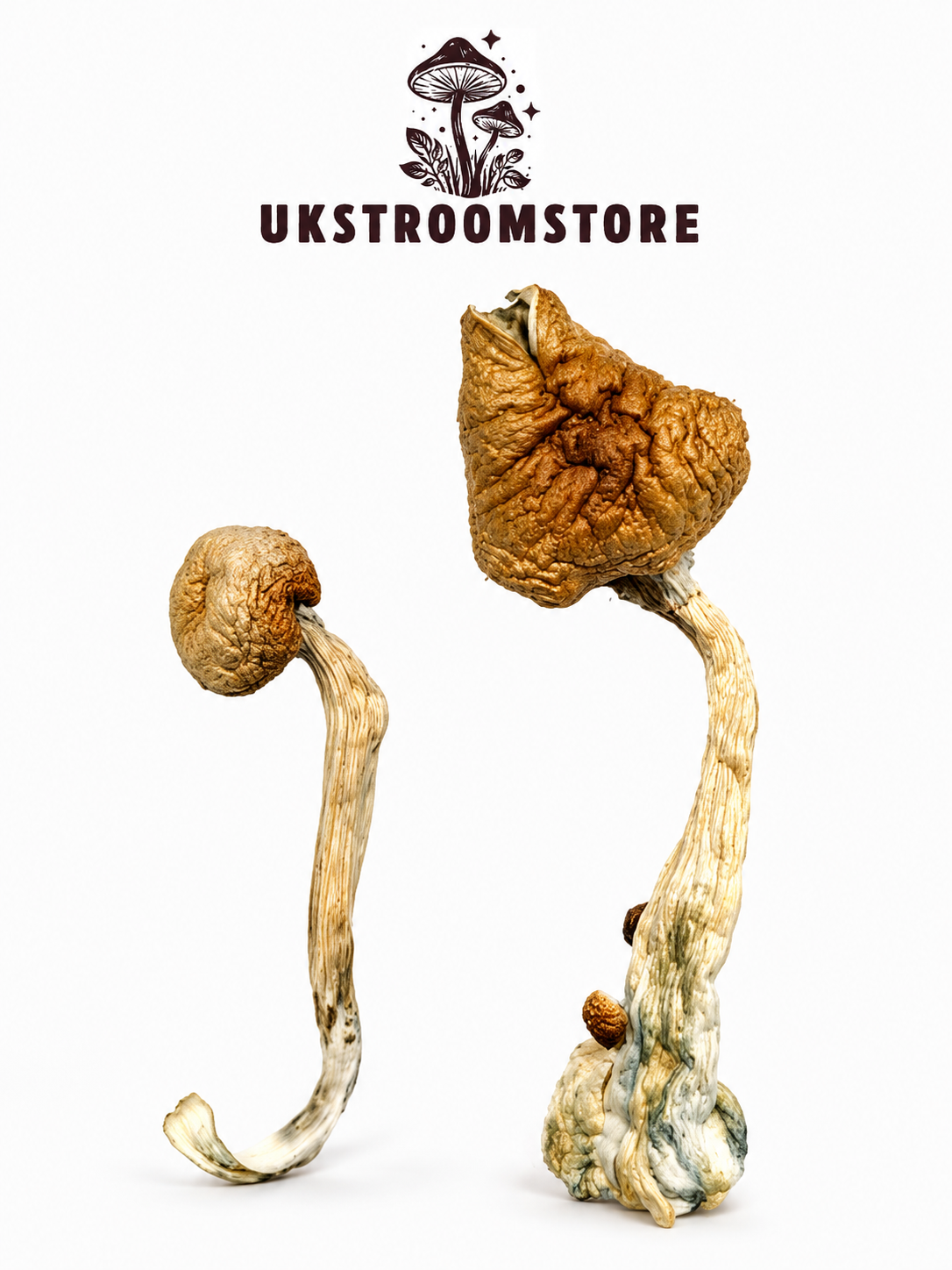
African Transkei mushrooms can display characteristics associated with Psilocybe cubensis, but visual appearance cannot independently establish species or chemical composition.
Cap shape, coloration, stem structure, and growth patterns can help describe mushrooms, but these characteristics cannot provide a reliable measurement of psilocybin concentration.
Consumers should treat strain names as descriptive labels rather than laboratory results.
Storage and Handling
Proper storage can help preserve mushroom quality.
Consumers should follow documented product instructions and protect mushroom products from:
- Excessive heat
- Moisture
- Direct sunlight
- Contamination
- Unauthorized access
Secure storage also helps reduce accidental ingestion by children and pets.
Legal Considerations
The legal status of psilocybin-containing mushrooms varies significantly around the world.
Some jurisdictions prohibit possession, cultivation, distribution, or sale. Other locations permit limited research or specific regulated therapeutic programs.
Laws can change, so consumers should consult current official government information for their jurisdiction.
Online availability does not establish legal compliance.
How to Research African Transkei Mushrooms
A responsible research process can help consumers evaluate information:
- Identify the claimed species and variety.
- Review complete ingredient information.
- Identify listed active compounds.
- Look for credible laboratory testing.
- Match laboratory results to the relevant batch.
- Research potential safety concerns.
- Check possible medication interactions.
- Review current local regulations.
- Consult a qualified healthcare professional when appropriate.
This approach helps distinguish evidence-based information from unsupported claims.
Frequently Asked Questions
What are African Transkei mushrooms?
African Transkei generally refers to a cultivated variety associated with Psilocybe cubensis, a species capable of producing psilocybin.
Do African Transkei mushrooms contain psilocybin?
Psilocybe cubensis varieties can contain psilocybin, although concentrations vary between mushrooms and batches.
Does the Transkei name guarantee potency?
No. Genetics, cultivation, maturity, processing, and storage can all affect active-compound concentrations.
Can psilocybin mushrooms cause unwanted effects?
Yes. Potential unwanted effects include anxiety, panic, confusion, nausea, altered perception, and impaired judgment.
Are African Transkei mushrooms legal everywhere?
No. Laws governing psilocybin differ substantially between jurisdictions.
Conclusion
African Transkei mushrooms commonly describe a cultivated Psilocybe cubensis variety associated with psilocybin. The variety name can help distinguish one cultivation line from another, but it cannot guarantee potency, purity, chemical composition, or a predictable experience.
Responsible research should focus on reliable identification, laboratory testing, scientific evidence, ingredient transparency, safety considerations, secure storage, and current legal requirements.
For questions involving psychoactive substances, medications, or individual health risks, qualified healthcare professionals and authoritative scientific or government sources provide the most appropriate guidance.
Contact Us
| Quantity | 7 gram, 14 gram, 28 gram |
|---|
Be the first to review “Buy African Transkei Mushrooms Online”
Related products

PSILLY SHROOM GUMMIES

SHROOMS EDIBLES

PSILLY SHROOMS CHOCOLATE BARS
SHROMIEZ CHOCOLATE BARS
SHROMIEZ CHOCOLATE BARS
SHROOMS EDIBLES
PSILLY SHROOM GUMMIES
BULK ORDER
Reviews
There are no reviews yet.